Start with the Basics
Learn what gnocchi are, what the dough is made from, and why the texture is soft.

• gnocchi guide •
A practical comparison of ingredients, texture, and cooking technique.
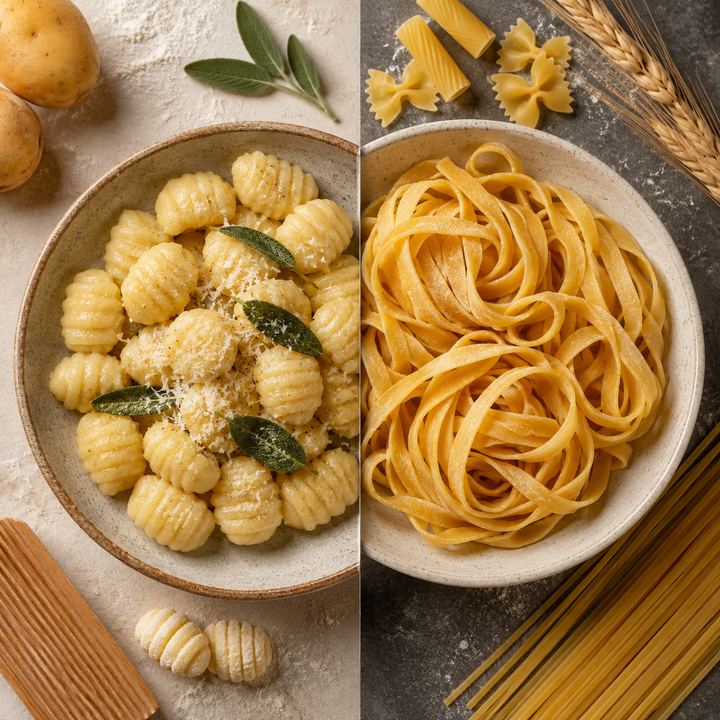
Flour provides the structure in pasta dough. In gnocchi, potato, other vegetables, or cheese form the base, and flour acts mainly as a binder. That is why gnocchi are soft and tender while pasta has more bite.
The technique differs too. Gnocchi dough is mixed briefly so it does not become tough, while pasta dough is kneaded until elastic. Gnocchi cook in just a few minutes and rise to the surface when they are ready.
They also carry sauce differently. The soft, ridged surface of gnocchi catches and absorbs some sauce, while pasta holds sauce on its exterior.
| Feature | Gnocchi | Pasta |
|---|---|---|
| Dough base | Potato, cheese, or vegetable puree | Flour, most often wheat flour |
| Role of flour | Supporting: it binds the base and is used sparingly | Primary: it provides the dough's structure |
| Texture | Soft and tender | Firm with a slight chew |
| Mixing and kneading | Brief mixing so the dough does not become tough | Longer kneading to develop elasticity |
| Cooking | Just a few minutes; the pieces float to the surface when they are ready | Several minutes, usually until al dente |
| Sauce | The soft surface absorbs some sauce, and the ridges catch it | The sauce coats the outside |
These are useful distinctions, not strict boundaries. Nearly every point has an exception.
Both are boiled in salted water and served with sauce, and restaurants often list them in the same part of the menu. Stores also stock gnocchi beside pasta, which makes it easy to assume they are simply another pasta shape.
Learn what gnocchi are, what the dough is made from, and why the texture is soft.
Compare potato, ricotta, cottage cheese, pumpkin, and other bases, each with its own character.
Gnocchi cook in minutes. Making a batch once will show the difference more clearly than a description can.