Next Step
Shape each piece of dough with a gnocchi board or fork.

• technique •
What goes into gnocchi dough and how the finished dough should feel.
Gnocchi dough combines a base with flour and, when the recipe calls for it, egg yolk. It should feel soft, slightly springy, and no longer sticky. Use flour with restraint because too much makes the gnocchi less tender.
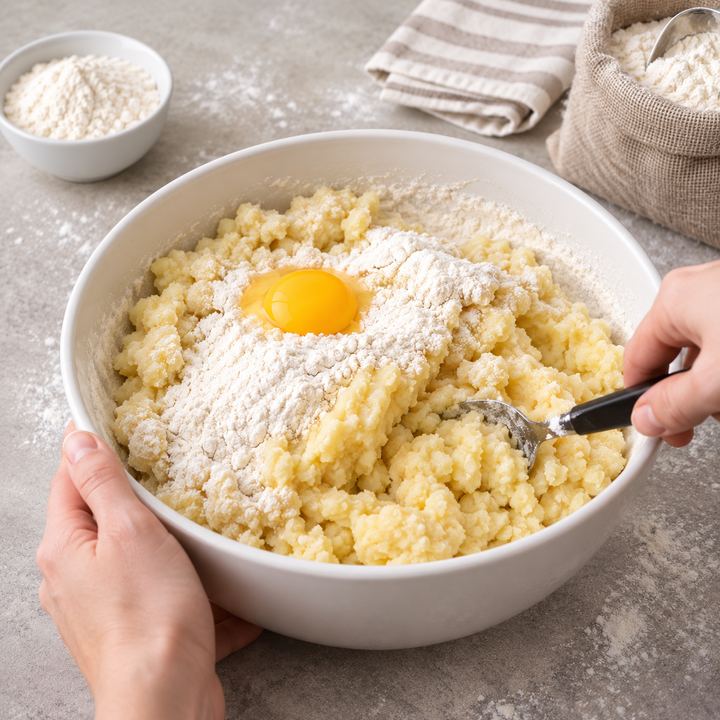
Careful shaping and cooking cannot make up for poorly balanced dough. Dough that is too firm produces tougher gnocchi, while dough that is too soft loses its shape and ridges. The right consistency gives you tender, neat pieces.
The ingredients depend on the type of gnocchi, but the basic structure is the same:
For potato gnocchi, choose potatoes with dense, less watery flesh. They need less flour and produce a more tender result.
A vegetable base can be boiled or roasted, and the method changes its moisture level. Boiling is simple and quick, whether the vegetables are whole, skin-on, or cut up. The drawback is that they absorb water and may require more flour later.
Roasting takes longer but produces a denser base with more concentrated flavor. Vegetables are often wrapped in foil and may be baked with salt to draw out moisture. A drier base needs less flour and is easier to handle. Follow the preparation method given in the individual recipe.
The dough should be soft but not loose, slightly springy, not sticky, and easy to roll into a rope. If it feels dense and tight, it contains more flour than it needs.
Dough that is too soft will not hold a pattern, while very firm dough is hard to roll across a board. The right consistency produces clean ridges that later hold the sauce. Continue with the guide to shaping gnocchi ridges.
You can, but the dough is best shaped right away. If you need a short pause, cover it so the surface does not dry out. For longer storage, freeze shaped gnocchi instead of holding the dough.