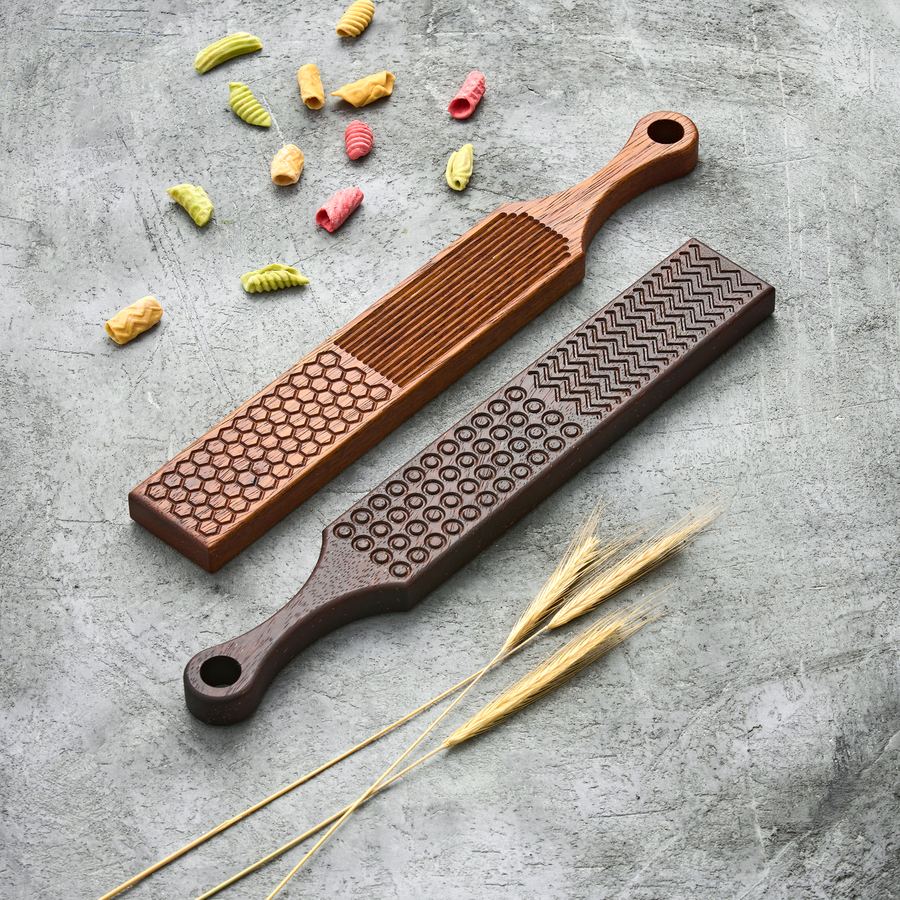
Carpentry Dynasty · Available on Amazon
Wooden gnocchi board
Use the ridged surface to shape gnocchi that hold sauce. Visit Amazon for the current price, availability, shipping, and returns.

• kitchen tool •
How basic, hardwood, and premium boards compare.
Gnocchi boards range from basic plastic or softwood tools to hardwood and premium models. The material and construction affect handling, wear, and the kind of grooves the board can produce.
These are usually the least expensive options: plastic boards or boards made from soft wood, often with straight grooves and one working side. The materials are inexpensive, so these boards generally do not last as long. The back is usually smooth, and a second pattern is rare.
Many basic boards are wide but short, which can feel awkward because a gnocchi piece is only about 3/4 to 1 1/4 inches (2 to 3 cm). A light board may also need to be held with the other hand so it does not slide under pressure. This category works for trying the technique or for occasional use.
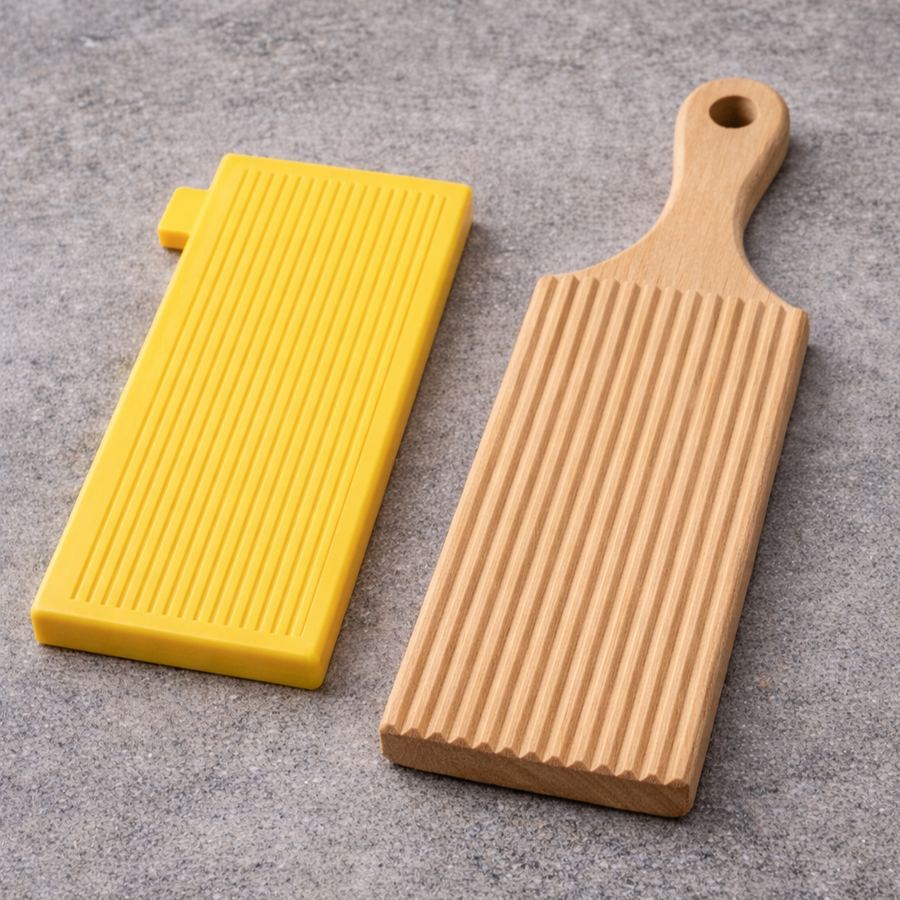
For regular home use, a hardwood board made from oak, walnut, or a similar wood is usually the best choice. It is strong and durable, holds its shape, and produces clean, defined ridges. Hardwood boards are also thicker and heavier than basic models, so they stay put while you roll the dough.
A double-sided model gives you two patterns and lasts longer because both faces serve as working surfaces. These boards are practical and attractive, and the wood is easy to care for. The main care steps are listed below in the care section.
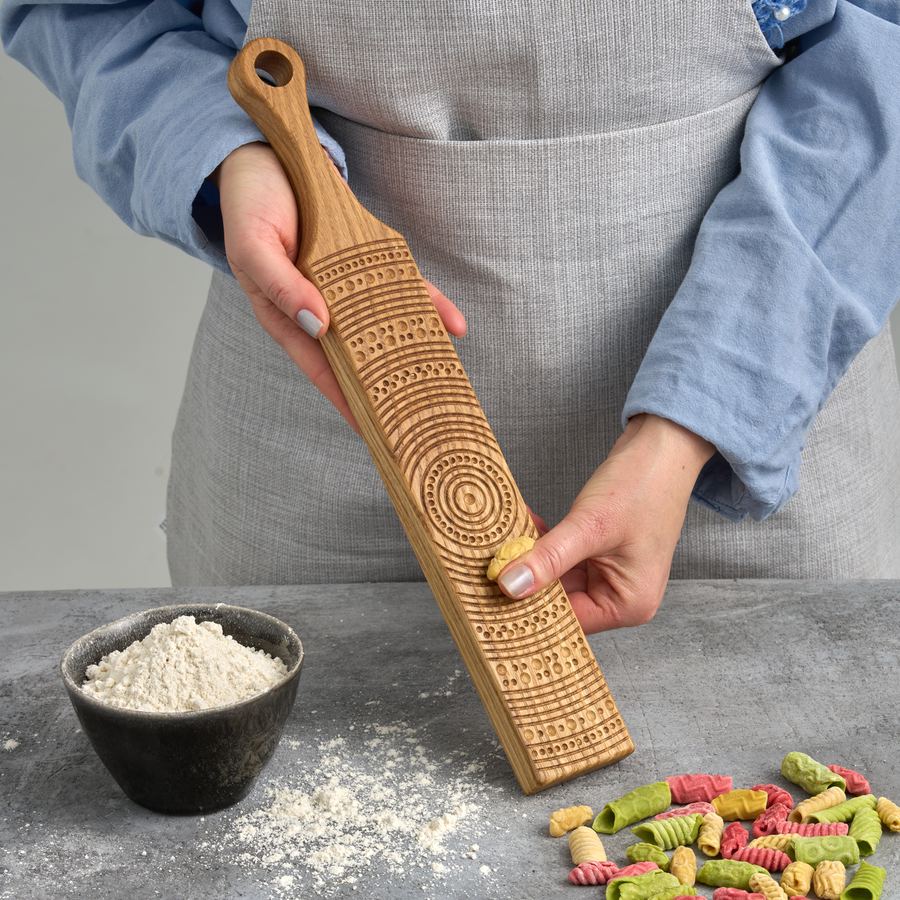
Some boards have a gnocchi surface on one side and a ravioli mold on the other. Use the gnocchi side in the usual way by rolling each piece over the grooves. For ravioli, lay a thin sheet of pasta over the mold, place filling in the wells, cover it with a second sheet, and press with your fingers or a rolling pin to seal the edges before cutting the ravioli apart.
This style suits a cook who makes both gnocchi and ravioli and would rather store one compact, multipurpose tool.
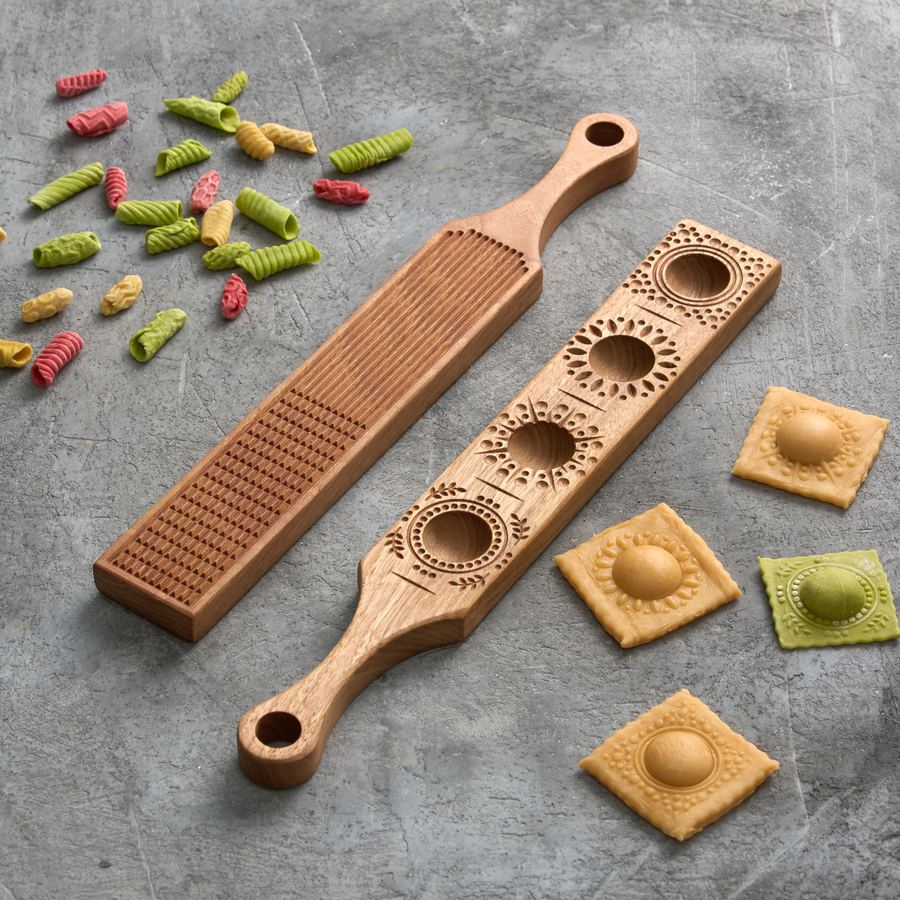
Premium boards are made from more expensive, often exotic hardwoods with distinctive grain and natural color. They are designed to function as kitchen tools while also highlighting the material and finish.
The denser, more stable wood produces crisper, more defined ridges and generally gives the board a longer working life. A premium board makes sense if you make gnocchi often, care how your kitchen tools look, enjoy the shaping process, or want a tool you can keep for years. The same qualities make it a natural gift.
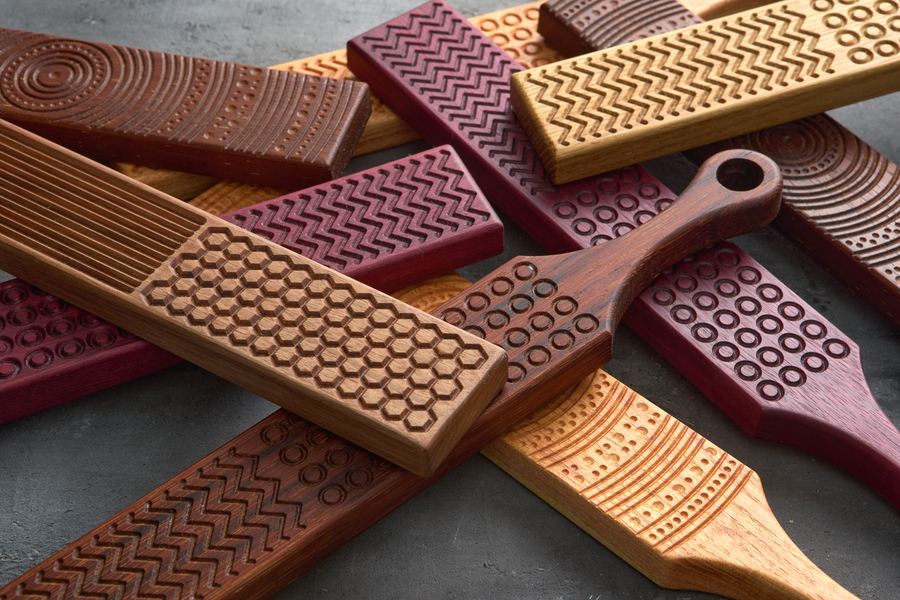
These boards are made by Carpentry Dynasty, the family woodworking shop behind World of Gnocchi. That is why we can explain their wood, groove patterns, and everyday use in detail. The board shown here is our own product.
A well-shaped ridge gives sauce somewhere to hold on. Save 15% on our gnocchi board when you order through Amazon.
Made by Carpentry Dynasty
Amazon promo codeWOFG15
Enter WOFG15 at checkout. The discount applies to eligible items while the Amazon promotion is active.
Carpentry Dynasty · Available on Amazon
Use the ridged surface to shape gnocchi that hold sauce. Visit Amazon for the current price, availability, shipping, and returns.