World of Gnocchi

Bean, Lentil and Tofu Gnocchi

Beans and legumes give gnocchi another set of textures. Some become a smooth puree; others enter the dough as flour.

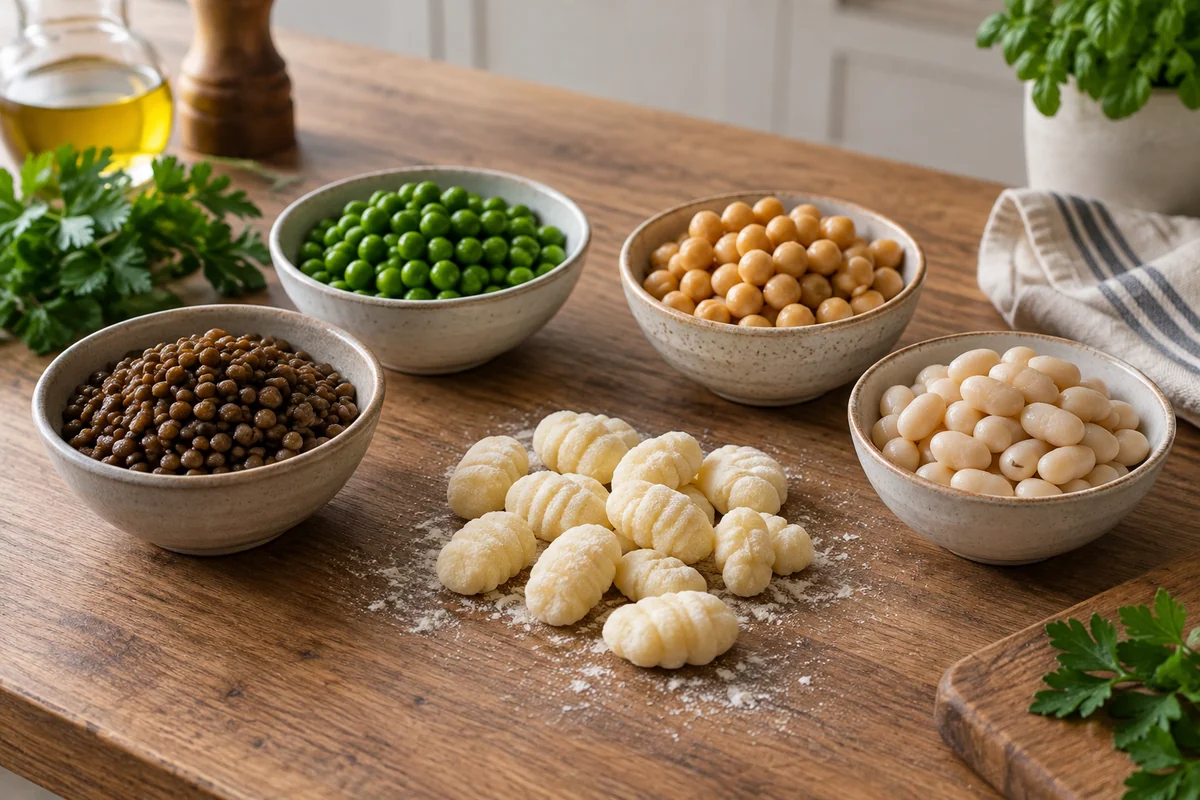
Small separate ceramic bowls of cooked lentils, green peas, chickpeas and white beans surrounding a small cluster of pale gnocchi dough pieces on a wooden kitchen worktop.

Whole beans and fine flours

White beans contribute a creamy, mild base, while chickpea and lentil flours bring a more noticeable earthy flavor. Green peas add sweetness and color. They do not all replace potato in the same way, and some doughs combine the two.

Tofu has a place here too

Blended tofu forms a smooth, savory base with little flavor of its own. That leaves room for both a tomato sauce and a ginger-sesame dressing. Legume gnocchi can be vegan, but the name alone does not rule out egg, cheese or a dairy-based sauce.

Lentil Gnocchi

Red lentil flour gives potato gnocchi a deeper, more savory flavor. The lentils belong to the dough rather than a sauce around it.
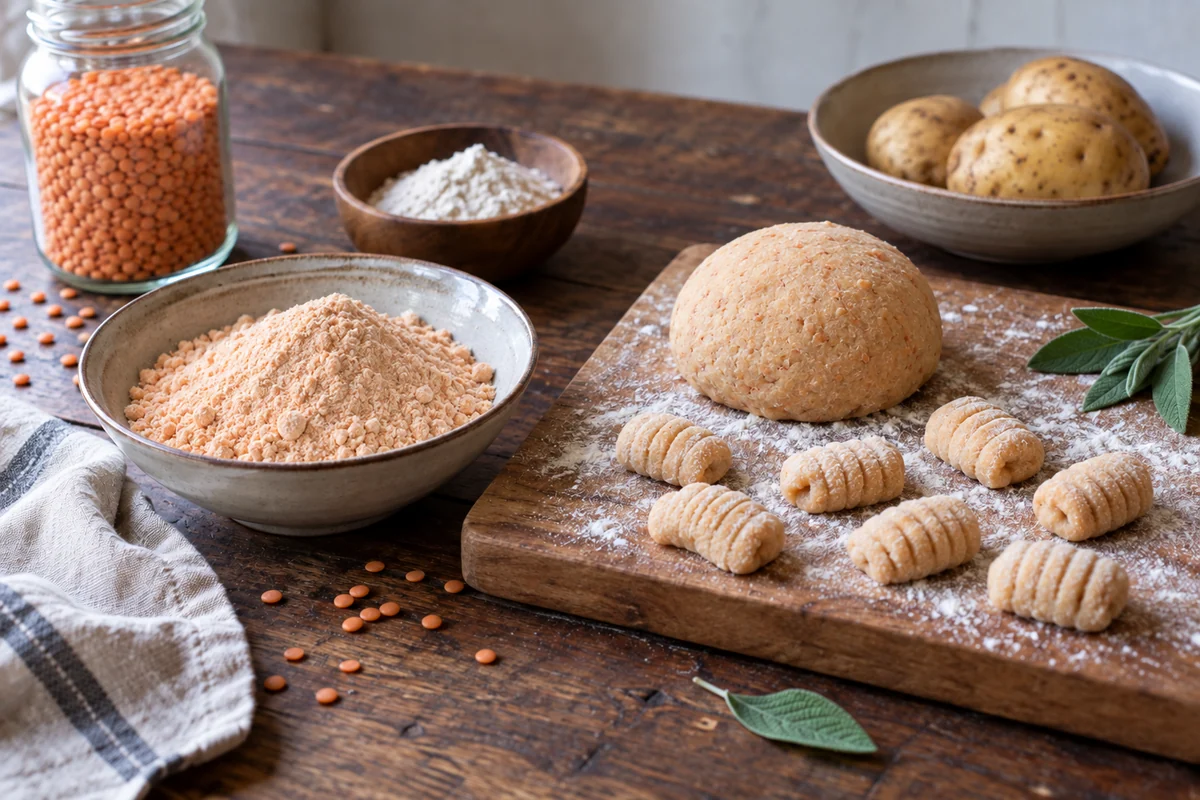
Red lentil flour, dry split red lentils and warm beige potato gnocchi dough on a wooden counter.

An earthy base for sharper flavors

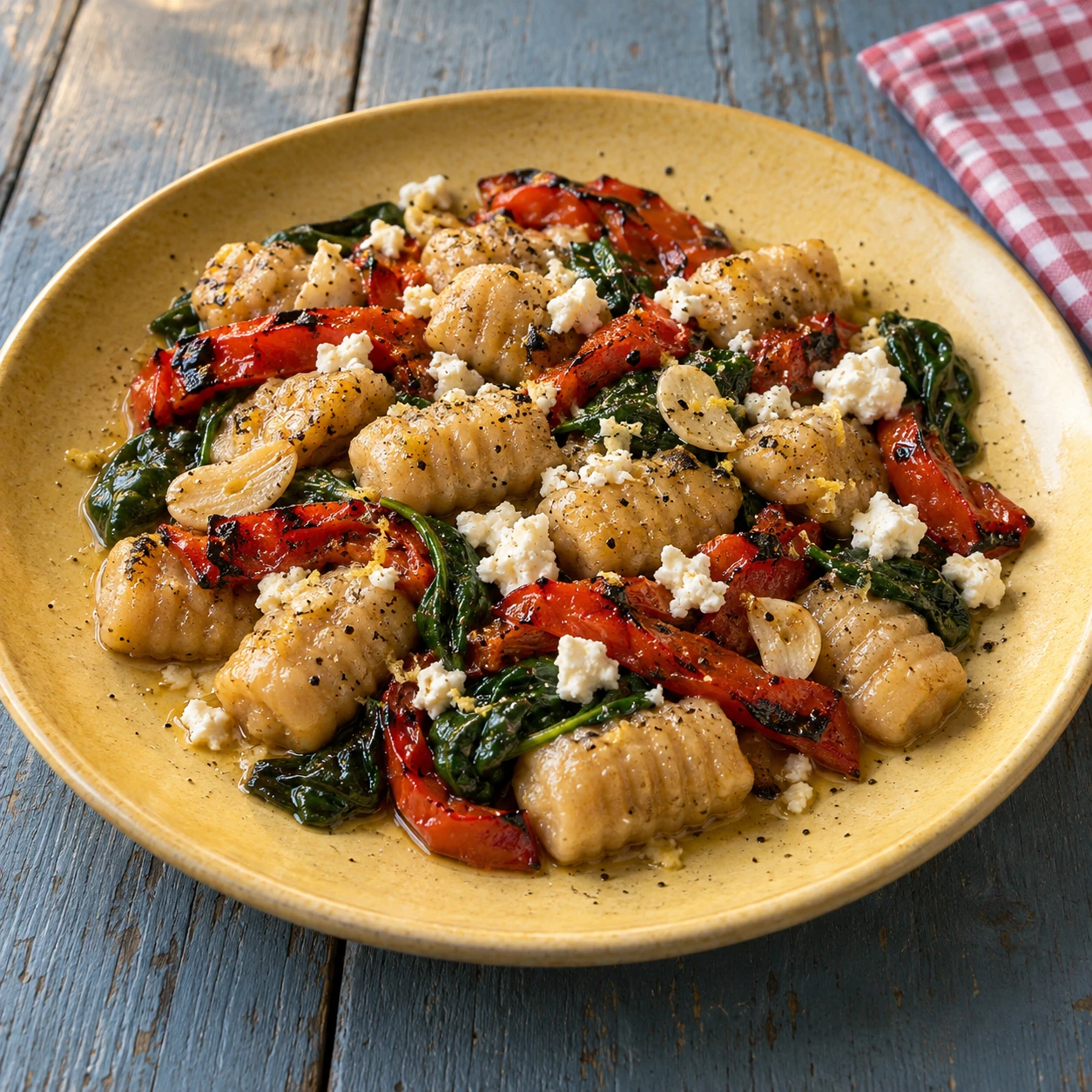
The flour's flavor sits comfortably beside sweet peppers, leafy greens and salty feta. Potato keeps the dumplings in a familiar family while the lentils make them distinct. This version contains egg and dairy, so lentil gnocchi do not necessarily mean a vegan meal.
Pea Gnocchi

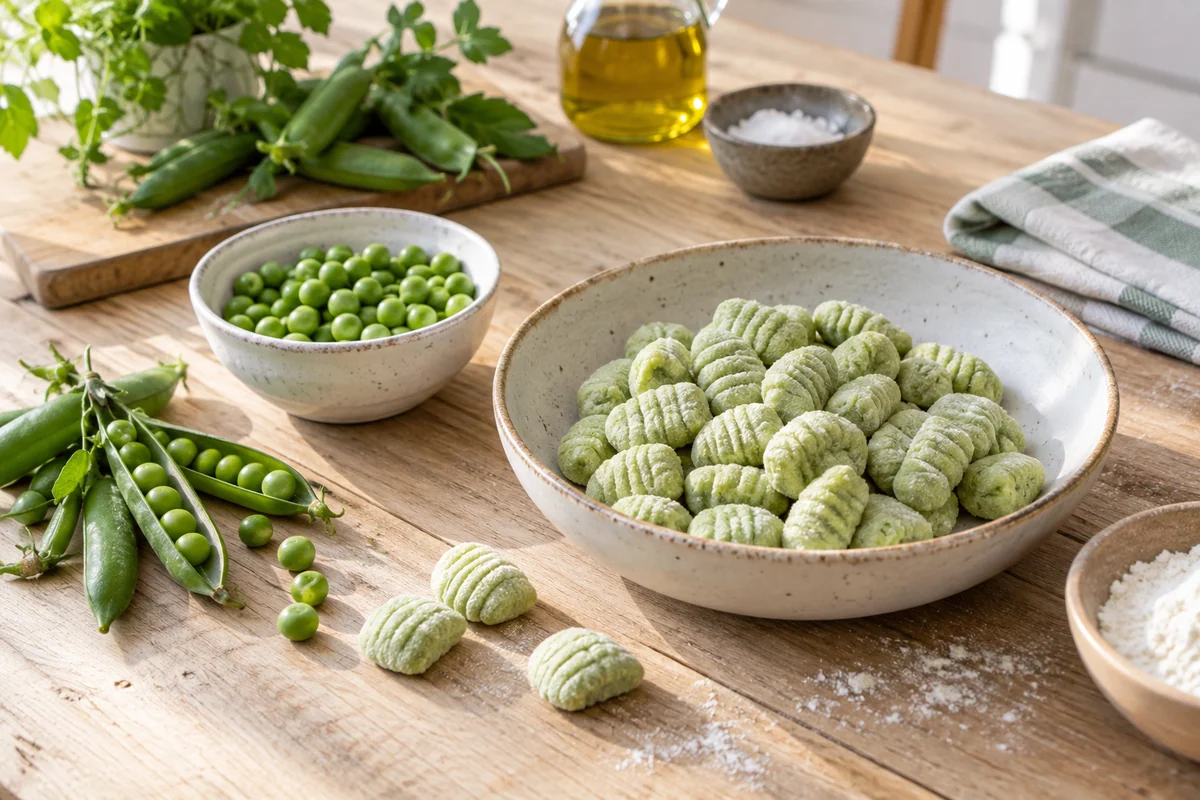
Green peas bring a sweet, fresh flavor to gnocchi, with a soft green color that feels quite different from spinach or kale.

Fresh peas in a few open pea pods alongside a small bowl of shelled peas and pale-green uncooked gnocchi on a light wooden worktop, spring daylight.

A sweeter shade of green

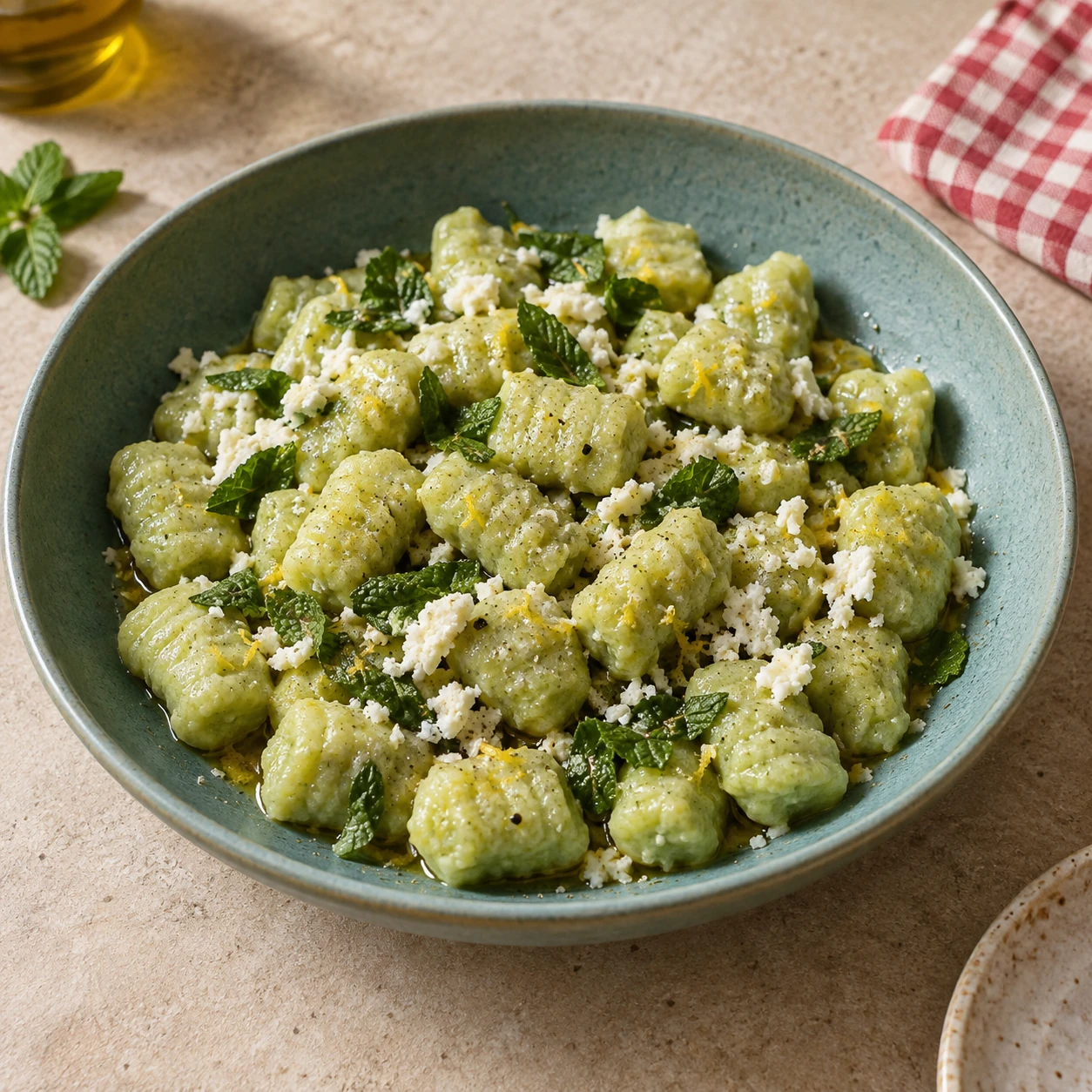
Potato and ricotta give the pea puree a soft, mild base. Mint and lemon emphasize its fresh flavor, while a salty cheese creates contrast. Frozen peas carry this character just as readily into a meal outside the short fresh-pea season.

Chickpea Gnocchi

Chickpea flour makes a savory, nutty dough with a different texture from potato gnocchi. A crisp surface is part of its appeal.

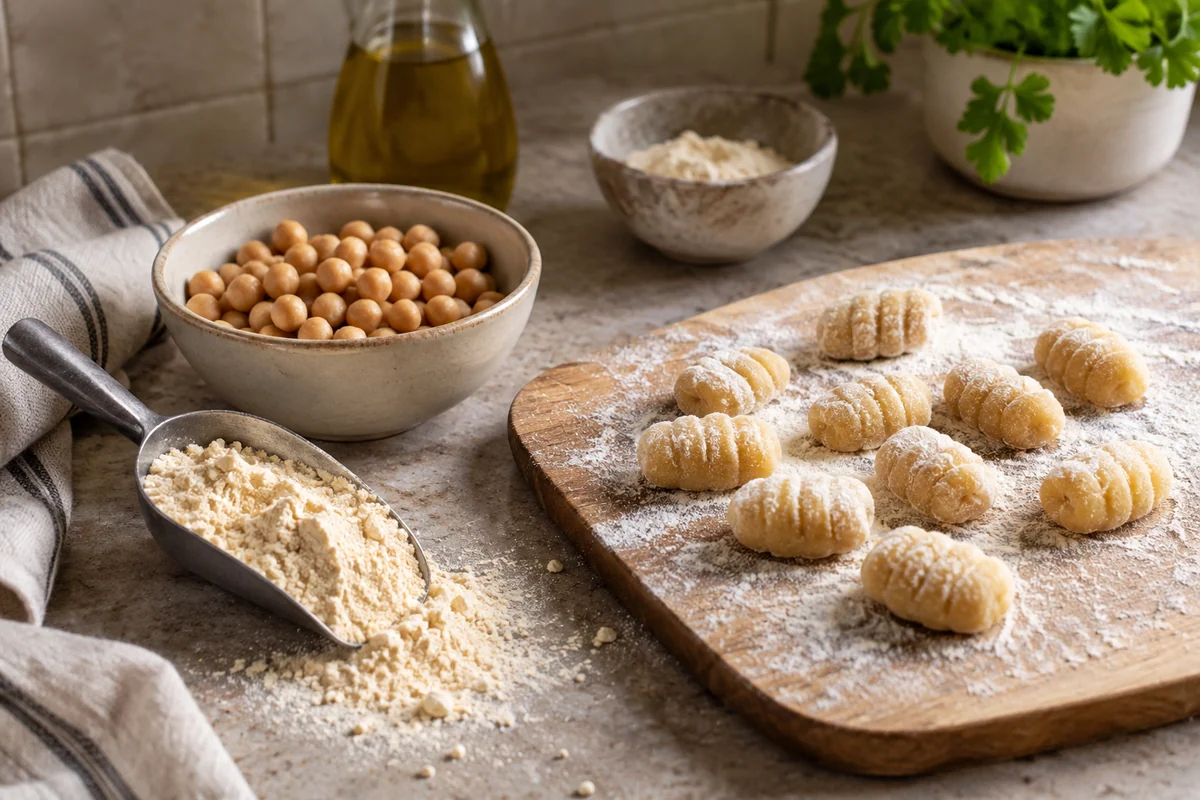
A small bowl of chickpeas, a scoop of pale chickpea flour resting on the surface and a few golden-beige uncooked gnocchi on a floured board.

A distinct chickpea-flour dough

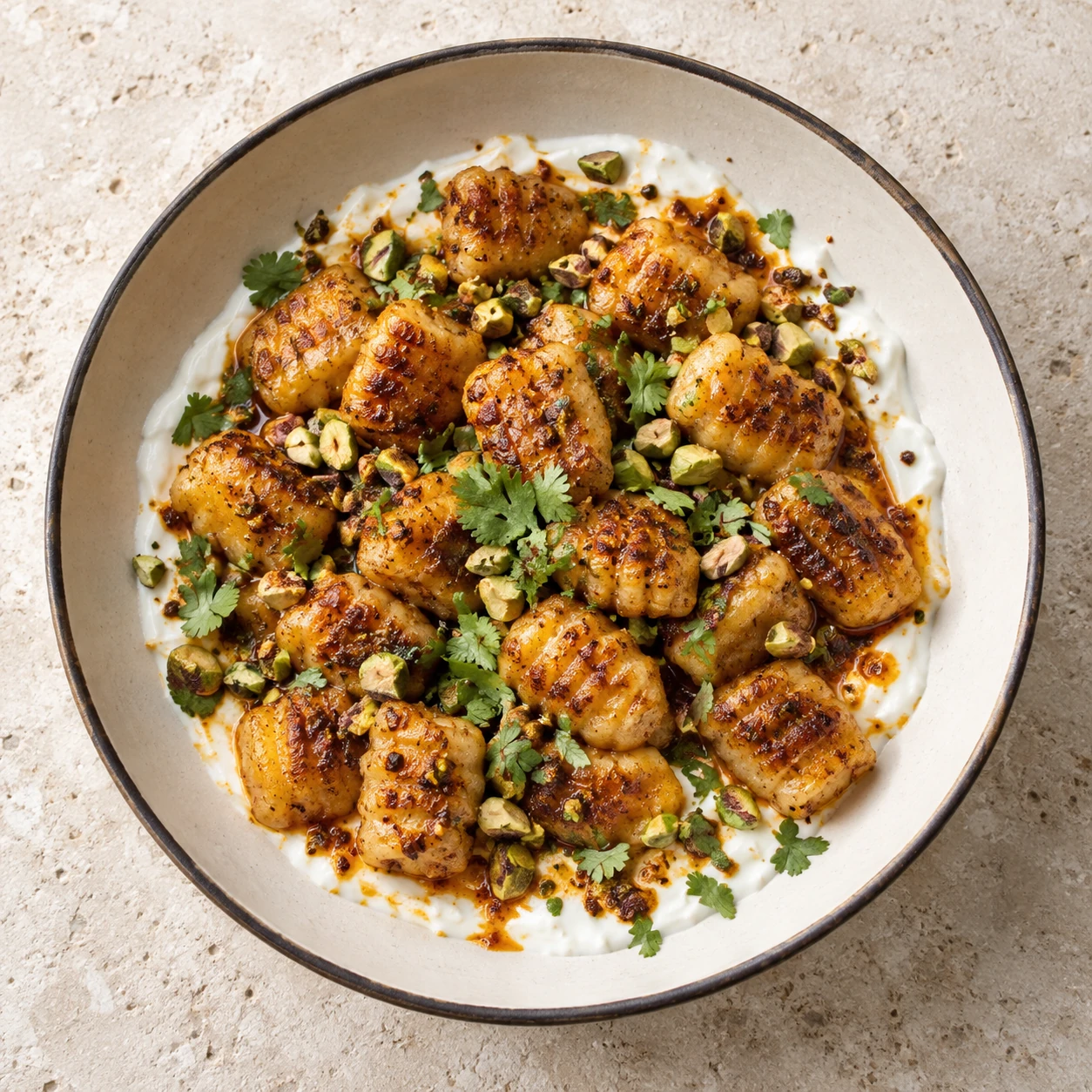
The flour forms the base of these gnocchi rather than being a small addition to potato. Their firmer, browned exterior suits spicy sauces and cool, tangy accompaniments. The chickpea version here is eggless, but its butter and yogurt finish makes it different from a vegan dish.

White Bean Gnocchi

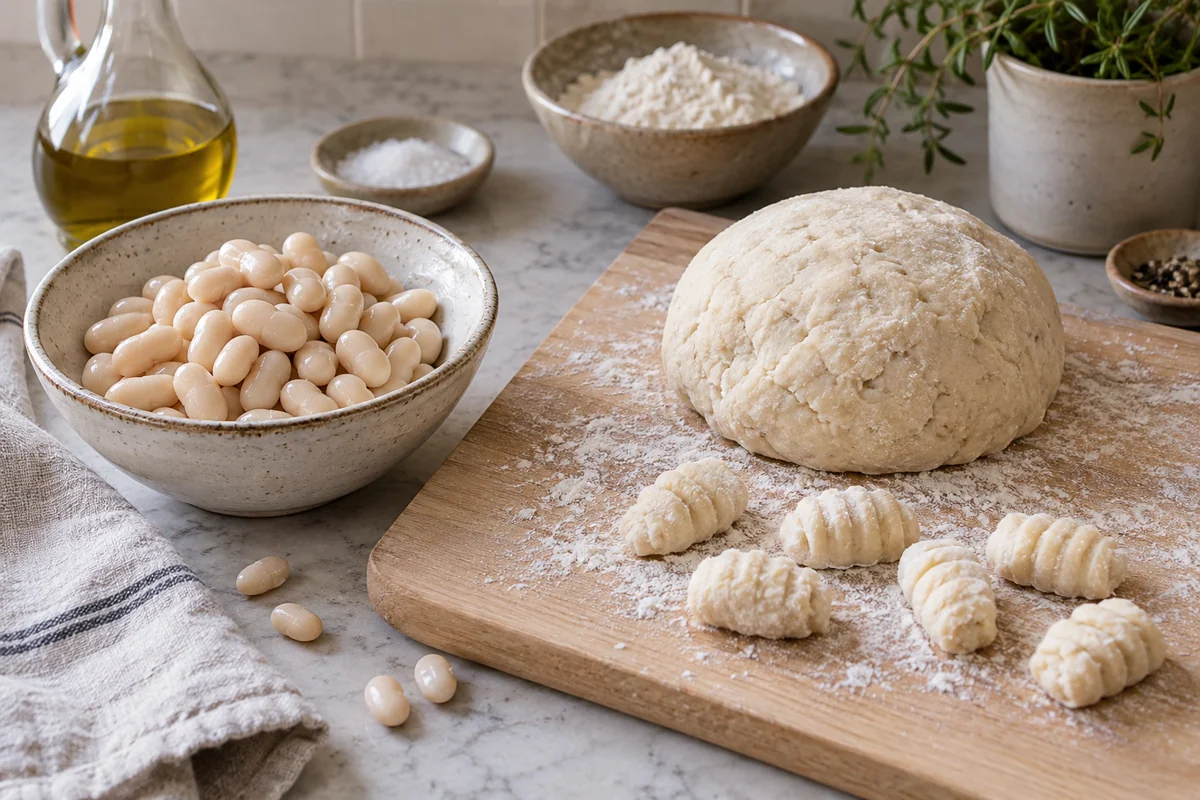
White bean gnocchi have a mild flavor and a creamy bean base. They can feel familiar even though there is no potato in the dough.

White cannellini beans in a ceramic bowl beside creamy-white bean gnocchi dough and a few uncooked dumplings on a pale maple board.

Beans in the dumpling, not beside it

Cannellini beans provide the body of these gnocchi, with flour giving the mixture structure. Their restrained flavor leaves room for lemon and rosemary or the deeper savoriness of mushrooms. The recipes here are plant-based, with different finishes for the same bean family.

Tofu Gnocchi

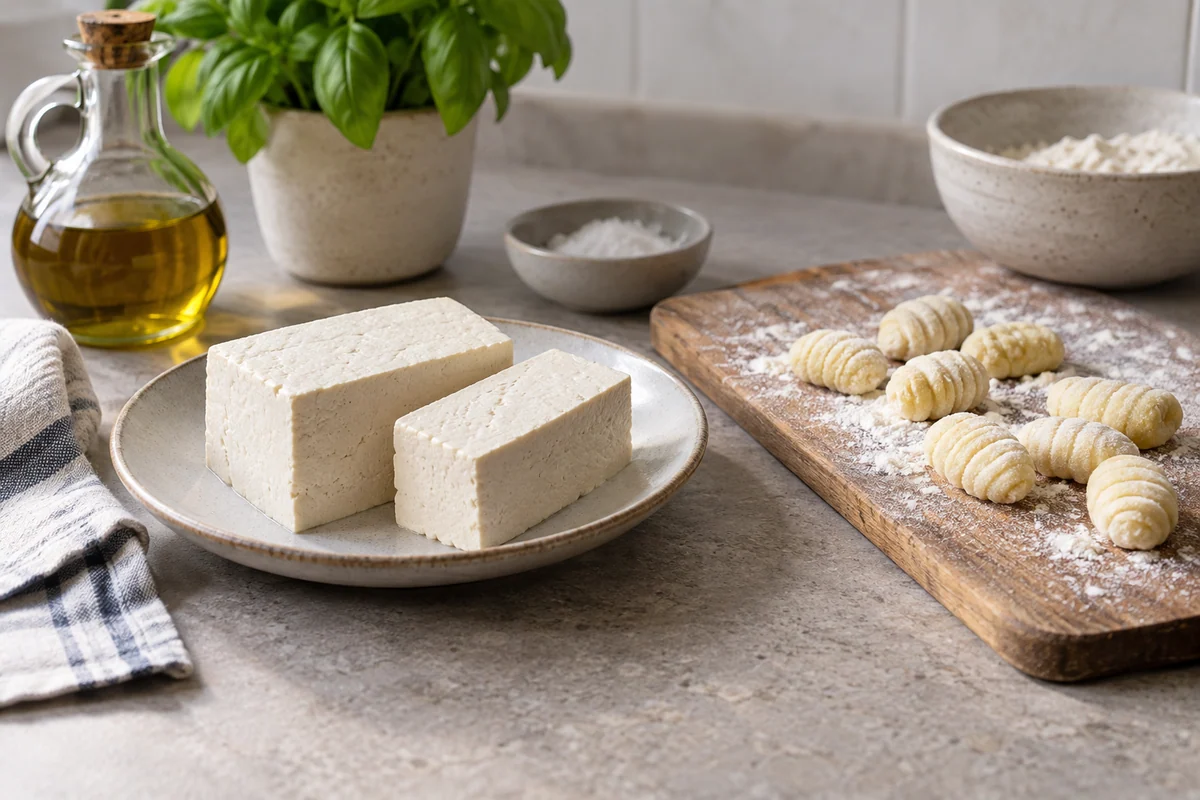
Tofu gives gnocchi a smooth, mild base with little sweetness. The flavor of the sauce has plenty of space around it.

A block of firm white tofu cut into two pieces on a small dish beside a few pale uncooked gnocchi on a separate lightly floured board.

Tomato or ginger and sesame

Tofu is part of the dough itself, not a topping. A tomato sauce gives these dumplings an Italian-style setting; ginger, sesame and greens take them somewhere else. Both approaches suit the same restrained base, while a browned surface brings another layer of savory flavor.