The Dough Sticks to Your Hands
Let the base cool and add flour a little at a time. A warm mixture absorbs more flour than it needs.

• technique •
Four stages of gnocchi making, plus solutions to common problems.
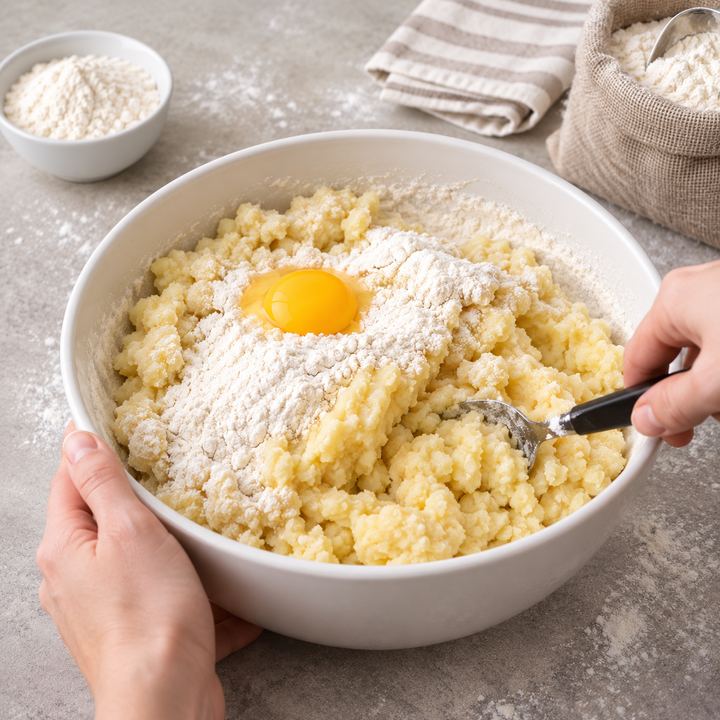 How to Make Gnocchi DoughDough that is too firm makes tough gnocchi, while dough that is too soft is difficult to shape and cook.Read →
 How to Shape Gnocchi RidgesWell-defined ridges help the sauce cling to each piece.Read →
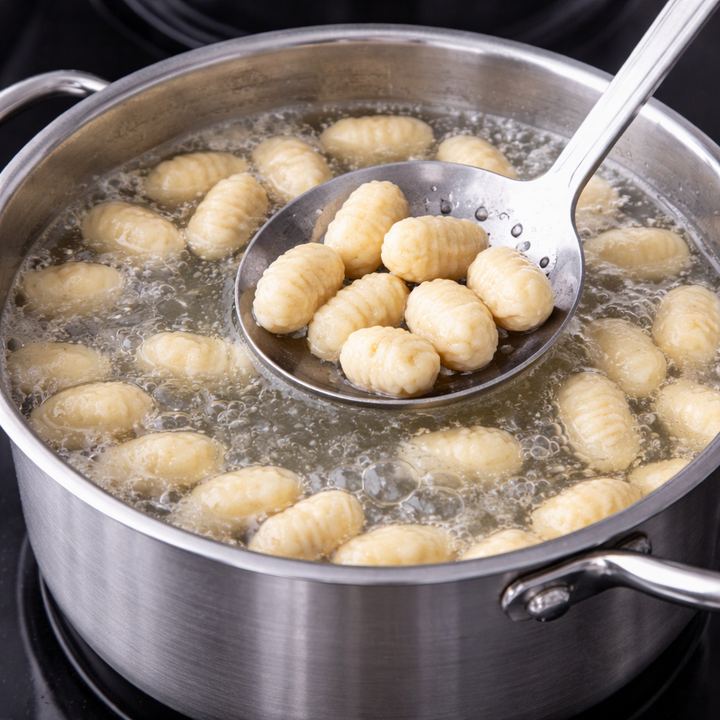 How to Cook GnocchiAvoid overcooking so the gnocchi keep their shape and tender texture.Read →
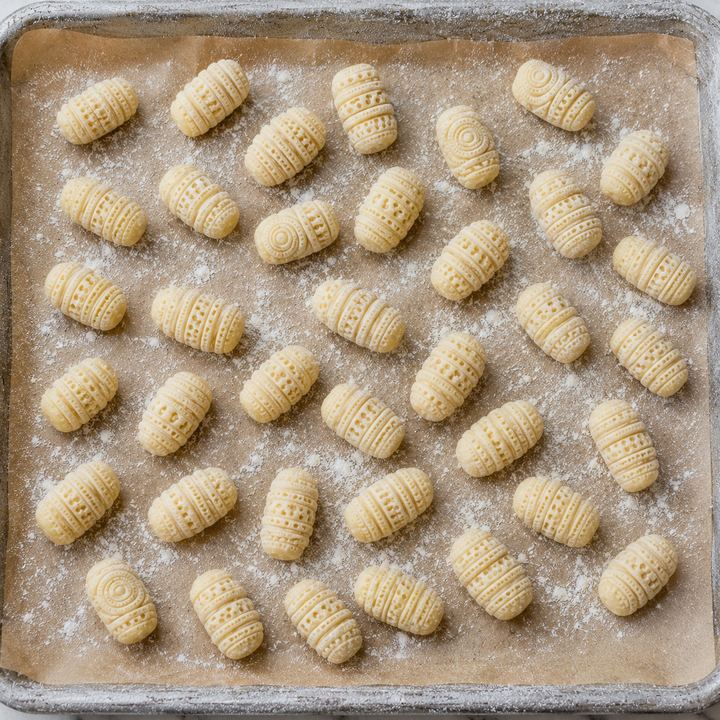 How to Freeze GnocchiProperly frozen gnocchi keep their shape and texture and cook well straight from the freezer.Read →
A gnocchi board leaves a defined pattern, and a double-sided board may offer more than one. A fork works for simple grooves.
What a Gnocchi Board Does →Compare Gnocchi Boards →Let the base cool and add flour a little at a time. A warm mixture absorbs more flour than it needs.
Too much flour or overmixing is usually the cause. Stop as soon as the dough comes together and no longer sticks to your hands.
This happens when the dough is too soft or the gnocchi stay in boiling water too long. A dough that holds its shape and a short cooking time help preserve the ridges.
Sauce has little to cling to on a smooth piece. Grooves from a fork or board catch it on each one.
The dough may be too wet, or the water may be boiling too vigorously. Keep the water at a gentle boil. If unshaped dough is too sticky to hold its shape, work in a little flour.
Transfer gnocchi from the pot directly into the sauce. If they sit in a pile without sauce, they can stick together within minutes.
Freeze the pieces separately on a board or sheet pan before transferring them to a bag.
Do not thaw frozen gnocchi. Drop them into boiling water straight from the freezer.
Ready to put the technique into practice?
Find a Recipe →